Women-Centered Biochar Production and Sustainable Agriculture Promotion
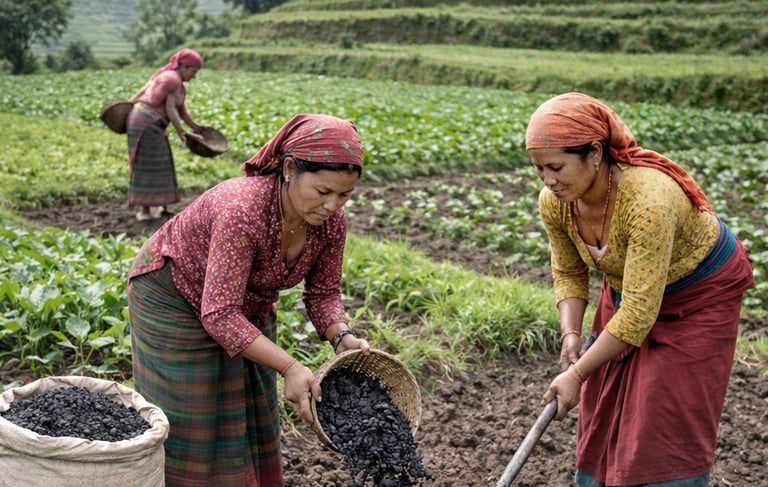
May 2026: 90 Nepali Women Learn About Biochar
Many communities in the Bagmati Municipality area of Sarlahi District in Nepal depend primarily on agriculture-based livelihood systems. In this area, women have been actively involved in farming, livestock rearing, and household activities. However, in recent years, the excessive use of chemical fertilizers to increase crop and grain production has weakened the natural fertility of the soil. In addition, the lack of proper management of agricultural residues has increased environmental pollution and resulted in the wastage of useful organic resources.
Biochar can be been used as a sustainable, environment-friendly, and effective solution to improve soil fertility, increase water retention capacity, balance soil pH, and reduce dependency on chemical fertilizers. It also contributes to climate change mitigation through carbon sequestration.
Women, who are at the forefront of farming and agricultural residue management in this area, have not been able to benefit from this technology due to lack of practical training, technology, and continuous production practices. Asplund Earth Alliance is working with local partners Bighnaharta Nepal and Saahasi Nepal to train 90 women how to make and use biochar on their farms.