We're Dreamers and Doers.
Asplund Earth Alliance is a global 501c3 environmental nonprofit organization. Our mission is to implement bold, transformative solutions that maintain balance in the ecosystem through the sustainable use, conservation and protection of natural resources.
Our story began in 2008 in Long Beach, California when a group of volunteers raised funds for our first solar project. Since then, we have developed and implemented hundreds of projects globally that improve lives while reducing harmful greenhouse gas emissions. Asplund Earth Alliance continues this work.
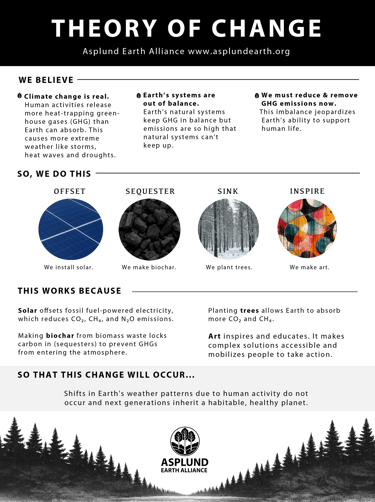
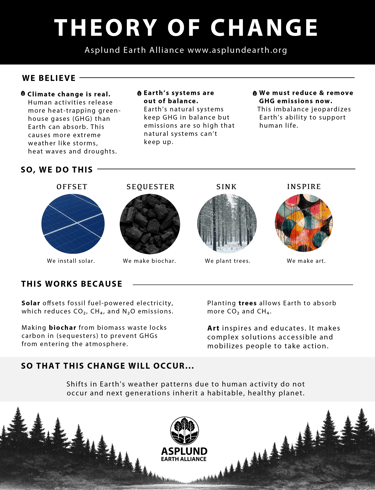
Read our theory about how our work will help next generations inherit a habitable, healthy planet.
Asplund?
“Asplund” is a Swedish word that means “a grove of aspen trees”. Aspen trees are remarkable. They are one of nature’s team players and they are a symbol of resilience and interconnection. What looks like a forest of individual aspen trees is often one single organism connected underground by an enormous root system. Because they’re connected underground, aspens can share water and nutrients and send chemical signals warning of pests or stress. This cooperation makes the whole grove more resilient than any single tree could be on its own. Also, aspens are a fire-adapted species. When wildfire clears competing trees, aspens often respond by sending up hundreds of new shoots from their roots. In many ecosystems, fire actually restores aspen forests rather than destroys them.
Aspen forests support more species of plants and animals than almost any other forest type in North America. Birds, pollinators, deer, elk, and countless understory plants depend on them. Their open canopies allow sunlight to reach the forest floor, creating rich, layered habitats. They are great for soil and water. They improve soil health by cycling nutrients efficiently and they help retain snowpack and regulate water flow, which benefits entire watersheds. Yep, Aspen trees are really cool.